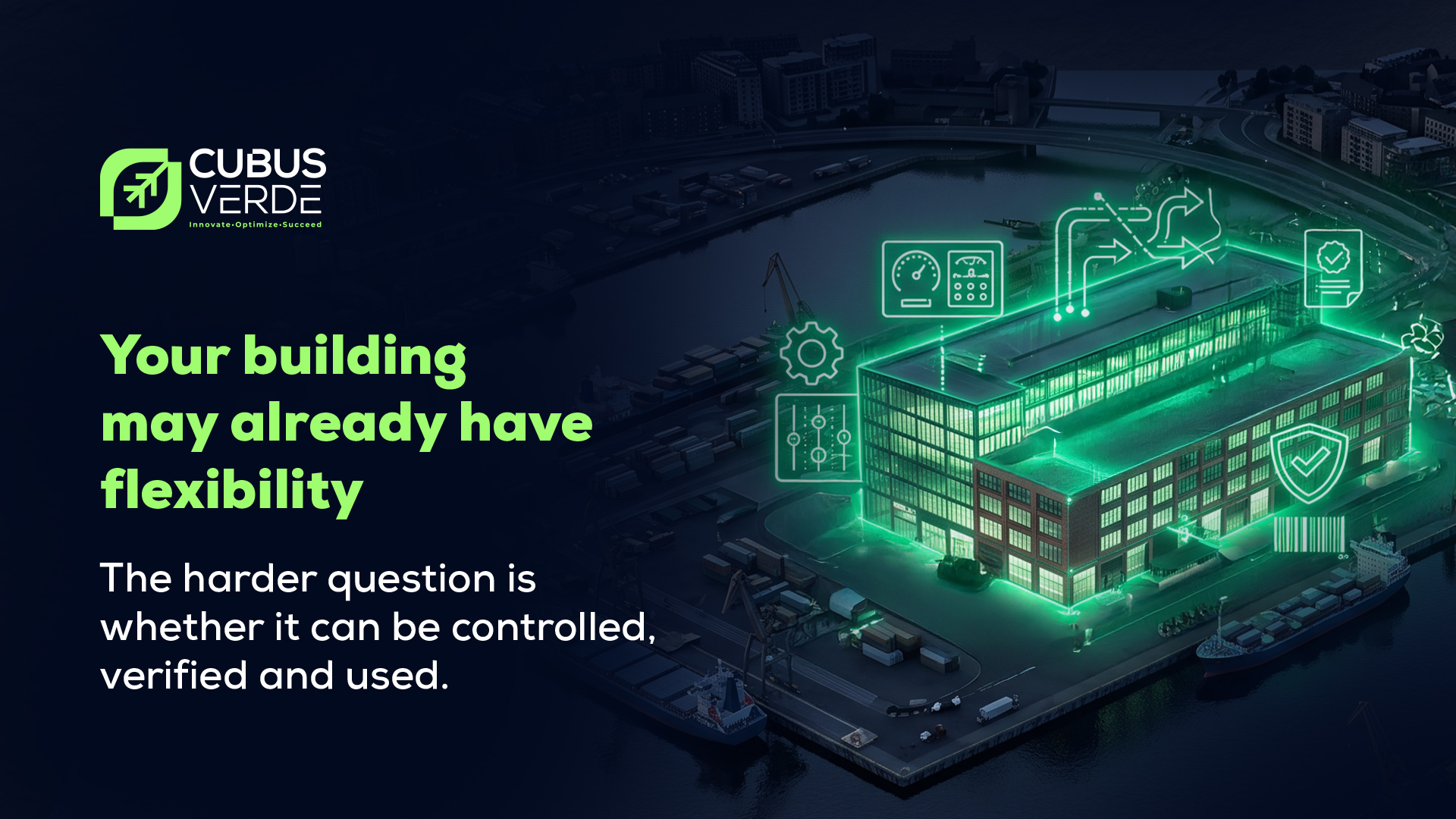
From Thermal Flexibility to Market Value
Buildings consume energy.
But when they consume it can matter almost as much as how much they consume.
Heating and cooling systems do not always need to respond at exactly the same moment. Within defined comfort and operational limits, some loads can be moved in time.
That creates thermal flexibility.
But there is an important distinction:
Having thermal capacity is not the same as having usable flexibility.
Where the flexibility comes from
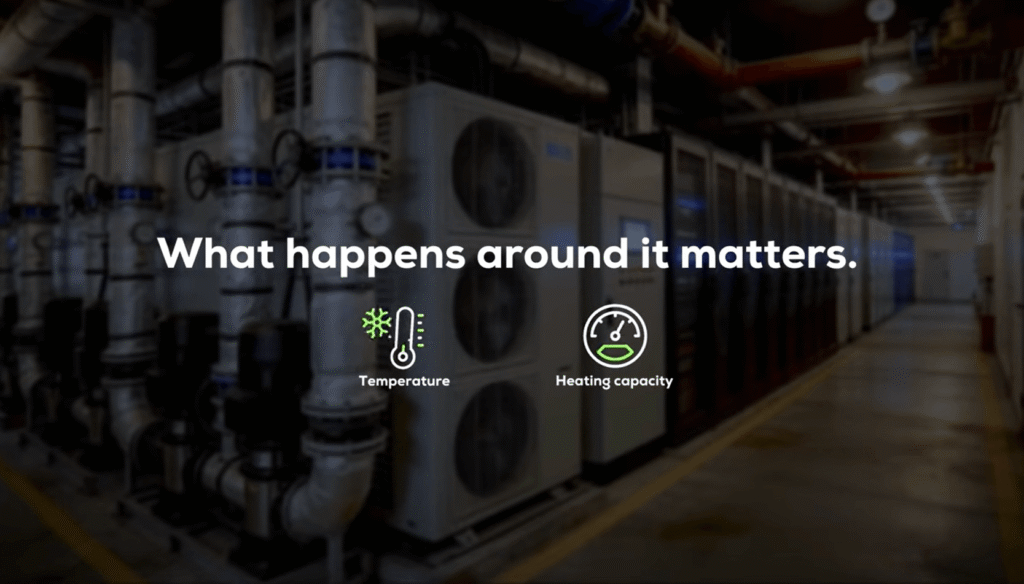
Buildings naturally store heat and cold in their structure, systems and indoor environment.
In some conditions, this allows the building to preheat or precool before demand changes, then temporarily reduce heating or cooling without immediately affecting indoor conditions.
Other controllable loads may also contribute, depending on the building and its systems.
The building is not generating energy.
It is changing when part of its demand occurs.
That can be valuable to the wider energy system.
But potential is not enough
A building may be physically capable of shifting demand without having the control structure required to do it reliably.
Before flexibility can be used, several questions need answers:
Which loads can move?
Which zones can participate?
How long can the response be sustained?
Which temperature and comfort limits must be protected?
What happens when the flexibility event ends?
Can the response be measured and verified?
Without those answers, flexibility remains a theoretical property of the building.
Automation makes flexibility controllable
This is where building automation becomes important.
A control strategy can coordinate heating and cooling while continuously considering zone conditions, occupancy, outdoor conditions and system limits.
It can also define how the building enters a flexibility mode, how it operates during the event and how it returns to normal operation afterwards.
For one building, that may be relatively straightforward.
Across a portfolio, consistency becomes much more important.
If every building uses different sequences, naming, data structures and operating rules, coordinating flexibility across several assets becomes difficult.
Standardised automation provides a repeatable structure.
Verification matters
A flexibility resource needs more than a command saying “reduce demand”.
The response has to be observable.
What changed?
When did it change?
How much did the building respond?
Were comfort limits maintained?
Did the systems return to normal operation as intended?
Trend data, defined control states and structured documentation create the evidence needed to answer those questions.
That evidence is valuable operationally regardless of which commercial flexibility model is eventually used.
The market comes after the control capability
The commercial opportunity depends on the building, the energy system and the mechanism being used.
That could involve tariffs, aggregation, demand-response arrangements, ancillary services or other flexibility programmes.
Not every building will qualify for every model.
And building automation alone does not create grid revenue.
What automation can do is make the underlying resource controllable, repeatable and verifiable.
That is the foundation required before market participation becomes a realistic discussion.
From individual building to portfolio resource
The larger opportunity appears when flexibility can be understood consistently across several buildings.
For a property owner, that means moving from questions such as:
“Can this building reduce heating for an hour?”
toward:
“Which assets can provide flexibility, under what conditions, and how can they be coordinated without compromising operation?”
That requires more than equipment capacity.
It requires structure.
Thermal capacity is potential. Controlled and verifiable flexibility is an operational resource.